
Core Technology Analysis of Water Park Wave Machines: Vacuum-Driven vs. Pneumatic Principles
Water parks are synonymous with excitement, and the wave pool often serves as the exhilarating centerpiece. Creating those thrilling waves relies on sophisticated machinery. Two primary core technologies dominate the market: Vacuum-Driven Wave Machines and Pneumatic (Air-Compressed) Wave Machines. Understanding the fundamental principles, advantages, and limitations of each is crucial for water park equipment selection and operation.
1. Vacuum-Driven Wave Machine Technology
– Core Principle: This system operates like a giant, controlled plunger. A large, sealed chamber (usually located below the pool floor) is first filled with water. Powerful vacuum pumps then rapidly extract the air from the chamber, creating a significant negative pressure (vacuum). At the precisely calculated moment, large valves open suddenly. The surrounding water, driven by atmospheric pressure and gravity, rushes violently into the vacuum chamber. This massive, rapid influx of water displaces the water in the pool above, generating a powerful surge that travels across the surface as a large wave.
– Key Characteristics:
– Wave Size & Power: Capable of generating very large, powerful, and long-period waves (often ocean-like swells), sometimes exceeding 2.5 meters in height. Ideal for creating dramatic effects.
– Wave Pattern: Typically produces cleaner, more defined single waves or sequences with distinct peaks and troughs.
– Energy Consumption: High. Creating the intense vacuum requires significant electrical power, especially for large systems and frequent wave cycles.
– Infrastructure: Requires substantial below-ground construction for the vacuum chamber(s), making it more complex and expensive to install, particularly in retrofits. Needs robust structural support.
– Maintenance: Vacuum pumps and large valves require rigorous maintenance. Potential points of failure include seal integrity and valve mechanisms.
– Control: Offers precise control over wave timing and magnitude, but wave shape options can be somewhat limited compared to pneumatic systems.
2. Pneumatic (Air-Compressed) Wave Machine Technology
– Core Principle: This technology utilizes compressed air as the driving force. Multiple large air chambers are positioned around the perimeter of the pool, submerged below the waterline. Powerful industrial blowers or compressors force large volumes of air into these chambers. As the air enters, it displaces the water within the chamber, pushing it upwards and outwards into the main pool body. By precisely controlling the timing, pressure, and sequence of air injection into different chambers, a variety of wave patterns can be created across the pool surface. Releasing the air allows water to flow back in, resetting the chamber.
– Key Characteristics:
– Wave Size & Power: Generally produces smaller to medium-sized waves (typically under 1.5 meters) compared to vacuum systems, though powerful units can create significant action. Wave height is often more limited.
– Wave Pattern: Highly versatile. Capable of generating diverse wave patterns – from gentle ripples and choppy surf to complex, multi-directional waves – by coordinating air injection into different chambers. Excellent for creating varied guest experiences.
– Energy Consumption: Significantly lower than vacuum systems. Compressing air is generally more energy-efficient than creating a large vacuum.
– Infrastructure: Simpler installation. Chambers are usually placed around the pool edge, requiring less extensive below-ground work than vacuum chambers. Easier to retrofit.
– Maintenance: Focuses on air blowers/compressors and control valves. Generally considered less mechanically complex than large vacuum pumps.
– Control: Offers sophisticated computer control for intricate wave sequencing, pattern variation, and synchronization, providing greater creative flexibility for different ride experiences.
Vacuum vs. Pneumatic: Choosing the Right Wave Machine
The choice between these wave machine core technologies depends heavily on the water park’s specific goals and constraints:
– For Large, Dramatic Waves: If the primary objective is generating massive, powerful, ocean-like waves, vacuum-driven wave machines are the traditional choice, despite higher energy and infrastructure costs.
– For Versatility and Efficiency: If the focus is on energy efficiency, varied wave patterns (surf, multi-directional), easier installation (especially in existing pools), and lower operational costs, pneumatic wave pool technology is often the superior solution. Modern high-power pneumatic systems can also create substantial waves suitable for thrill seekers.
– Project Scale & Budget: New, large-scale developments might consider vacuum for maximum wave height potential. Mid-sized parks, renovations, or parks prioritizing diverse experiences and lower operating costs will find pneumatic systems highly attractive.
Conclusion
Both vacuum-driven and pneumatic wave generation technologies are mature and effective methods for creating the captivating waves essential to a successful water park equipment lineup. The vacuum system excels in raw power and height, while the pneumatic system offers greater versatility, energy efficiency, and operational flexibility. When selecting the core wave machine technology for a water park project, park developers and operators must carefully weigh factors such as desired wave characteristics, available budget (both capital and operational), site constraints, and long-term maintenance requirements. Understanding the fundamental principles behind each system is the first step towards making an informed decision that delivers maximum guest satisfaction and operational success for your water park.
Products
-
 Custom FRP Super Vortex Water Slides for Adults
-
 Flying Mat Slide for Sale - Premium Water Park Slides Manufacturer | Commercial Water Park Equipment
-
 Premium Fiberglass Water Slides & Commercial Water Park Equipment for Sale - Water Roller Coaster
-
 Premium Family Water Slides for Sale | Commercial Water Park Equipment Manufacturer
-
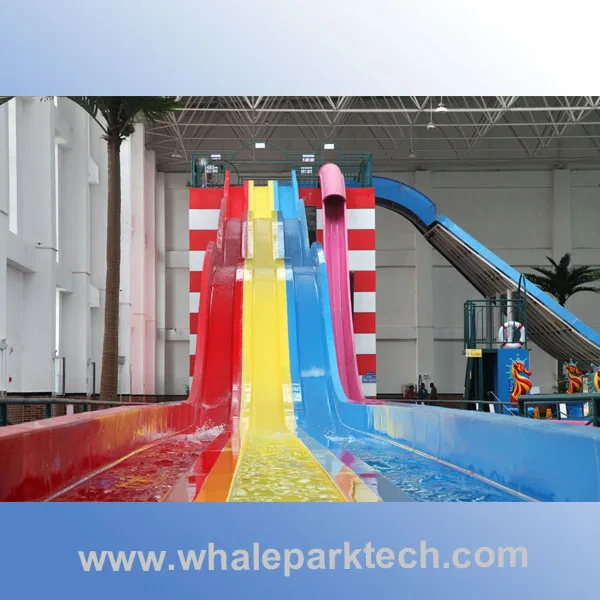 Commercial Indoor Rainbow Water Slide - FRP Slide with Steel Structure