
When a municipality, resort, or indoor water play venue begins planning a water attraction, the terms interactive water playground and aquatic play structure are often used interchangeably—yet conflating them at the outset can trigger months of misalignment in design, permitting, and budget.
The Core Difference: Ground-Level Spray vs. Structural Play
A splash pad—also called a spray pad, splashpad, or wet deck—is a zero-depth aquatic play area built around ground-level jets, fountains, misting arches, and water cannons. Water drains into a recirculation or discharge system, and there is no standing water. The footprint is typically modest, and the layout is open, allowing caregivers to supervise from the perimeter. Splash pads are the lower-barrier entry point for parks departments, schools, and community plazas because they simplify health-department approvals and reduce staffing requirements.
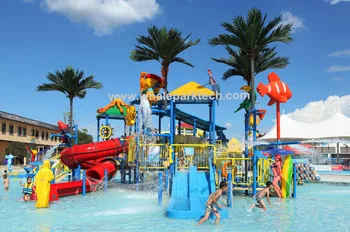
An interactive water play structure—sometimes marketed as a wet playground, multi-level water play structure, or aquatic play structure—adds verticality. It integrates elevated decks, climbing elements, slides, and a tipping bucket water play structure into a coordinated water environment. The water effects are no longer confined to the ground; they cascade from towers, spray from bridges, and discharge from buckets in timed cycles. This format delivers longer dwell times and a stronger visual identity, but it also introduces structural engineering, fall-protection, and anchoring requirements that a flat splash pad does not demand.
For an indoor water play venue, the distinction becomes even more consequential. A waterpretpark indoor environment must account for humidity control, drainage capacity, and air quality. A multi-level water play structure with a large tipping bucket water play structure introduces a concentrated, recurring water release that affects HVAC loads and floor drainage design. A splash pad, by contrast, is easier to integrate into an existing indoor envelope. The right choice depends less on trend and more on the visitor experience the operator intends to deliver: a flexible, accessible cooling amenity or a destination-scale centerpiece.
What Separates a Competent Supplier from a Costly One
Standards Are the Starting Line, Not a Selling Point
Any commercial water slide manufacturer or Water Playground Equipment Manufacturer can print “certified” on a brochure. The useful question is which standards, and whether they apply to the specific product category. For commercial water slide equipment and flume rides, the European EN 1069 series and the American ASTM F2376 are the most widely referenced frameworks for structural integrity, impact attenuation, and entrapment prevention. Water Features and spray elements often fall under ASTM F2461 or equivalent aquatic play safety practices. A supplier that cannot specify which standard governs which product line—and produce third-party test documentation rather than a self-declaration—is asking the buyer to absorb compliance risk.
Fiberglass Quality Is Measurable
Fiberglass Slides are not a commodity. The riding surface is where safety and longevity are won or lost. Industry procurement specifications commonly call for a flume wall thickness of at least 6 mm and a interior gelcoat thickness in the range of 0.45–0.50 mm with a smooth, 600-grit finish. Gelcoat applied below that range accelerates surface degradation; gelcoat applied unevenly creates friction variation that affects rider behavior. A commercial water slide supplier should be willing to share lay-up specifications, resin type, and surface inspection criteria before a purchase order is signed, not after delivery.
Service Attitude Is Revealed Before the Sale
After-sales language is easy to write and hard to verify. A supplier’s service posture becomes visible during the procurement process itself: how quickly it responds to technical questions, whether it provides installation drawings and O&M manuals as standard deliverables, and whether it commits to training timelines in the contract rather than in a marketing paragraph. For water park maintenance services, the practical benchmarks buyers should seek are a named service contact, a defined response window (24–48 hours is a common reference point in the industry), and availability of spare parts—particularly seals, pump components, and replacement spray nozzles—without seasonal markups. A supplier that treats service as an afterthought during the sales phase rarely improves after the invoice is paid.
Price Is a Lifecycle Question
The lowest quotation on commercial water slide equipment is rarely the lowest-cost decision. Equipment procurement typically represents only 50–60% of a water-attraction project’s total investment; civil works, water treatment, installation, commissioning, and ongoing maintenance absorb the remainder. A fiberglass aquatic structure may carry a higher upfront figure than an inflatable alternative, but its service life is measured in 12 years or more, compared with 2–4 years for inflatable units that require repeated replacement, daily setup labor, and higher insurance exposure. A supplier that helps the buyer model total cost of ownership—rather than defending a unit price in isolation—demonstrates the commercial maturity that matters over a decade of operation.
Using Consistent Terminology with Suppliers
Buyers searching for Splashpads, Sprayparks, Waterslides, Watertoys & Equipment Manufacturers are often at different stages of project definition. A parks department replacing an aging water splash zone may need a splash pad design and Splash Pads Manufacturer with a fast permitting track, while a resort developing a waterpretpark indoor anchor attraction needs a partner capable of aquatic structures and water play features for splash pads, spray parks and indoor water play. The language a supplier uses should reflect that segmentation rather than collapsing every product into a single “water park” claim.
Products
-
 Custom FRP Super Vortex Water Slides for Adults
-
 Flying Mat Fiberglass Water Slide
-
 Premium Fiberglass Water Slides & Commercial Water Park Equipment for Sale - Water Roller Coaster
-
 Premium Family Water Slides for Sale | Commercial Water Park Equipment Manufacturer
-
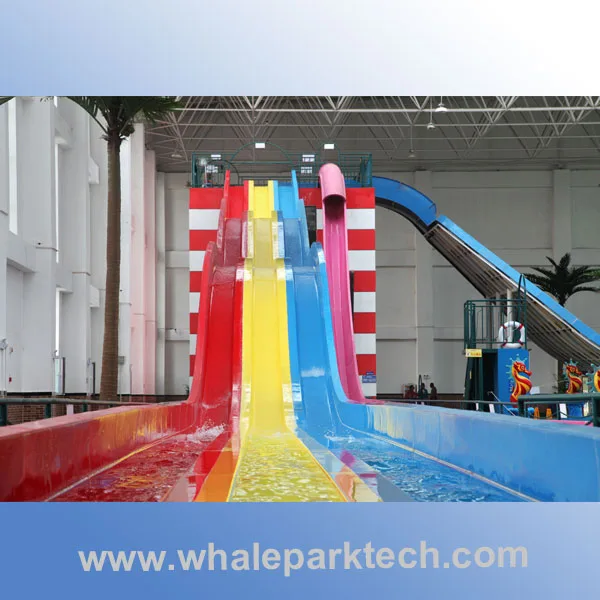 Commercial Indoor Rainbow Water Slide - FRP Slide with Steel Structure
-
 Large Sky Loop Water Slide for Sale | Water Park Equipment Suppliers
-
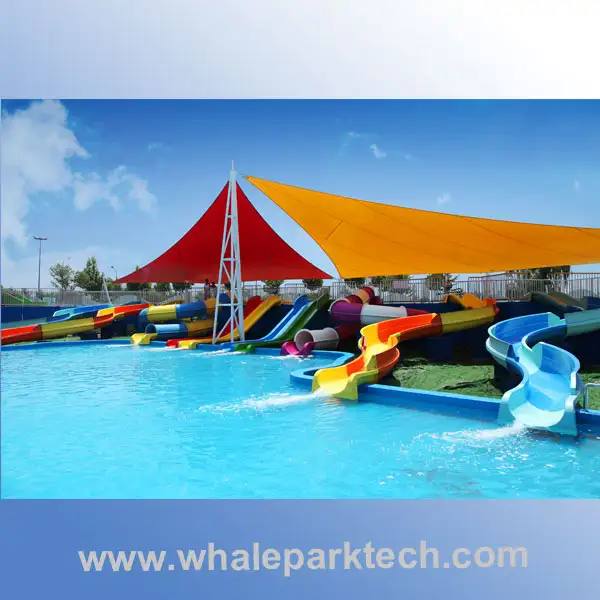 Parent-Child Water Slides | Safe Family Splash Rides for Kids