
A commercial water slide is not a catalogue purchase. It is a structural, hydraulic and operational commitment that affects guest experience, safety records and maintenance costs for many years. The global supply market is crowded: water park equipment manufacturers range from fully integrated engineering firms to intermediaries sourcing from third-party factories. For resort developers, municipal procurement teams and family entertainment operators, the difference only becomes visible during construction—or at the first inspection.
This article sets out the standards that matter when evaluating a commercial water slide manufacturer, organised around quality and compliance, service conduct, price rationality and a practical selection framework. It avoids brand names because the principles apply whether you are buying a single pool slide or a multi-tower attraction for a destination water park.
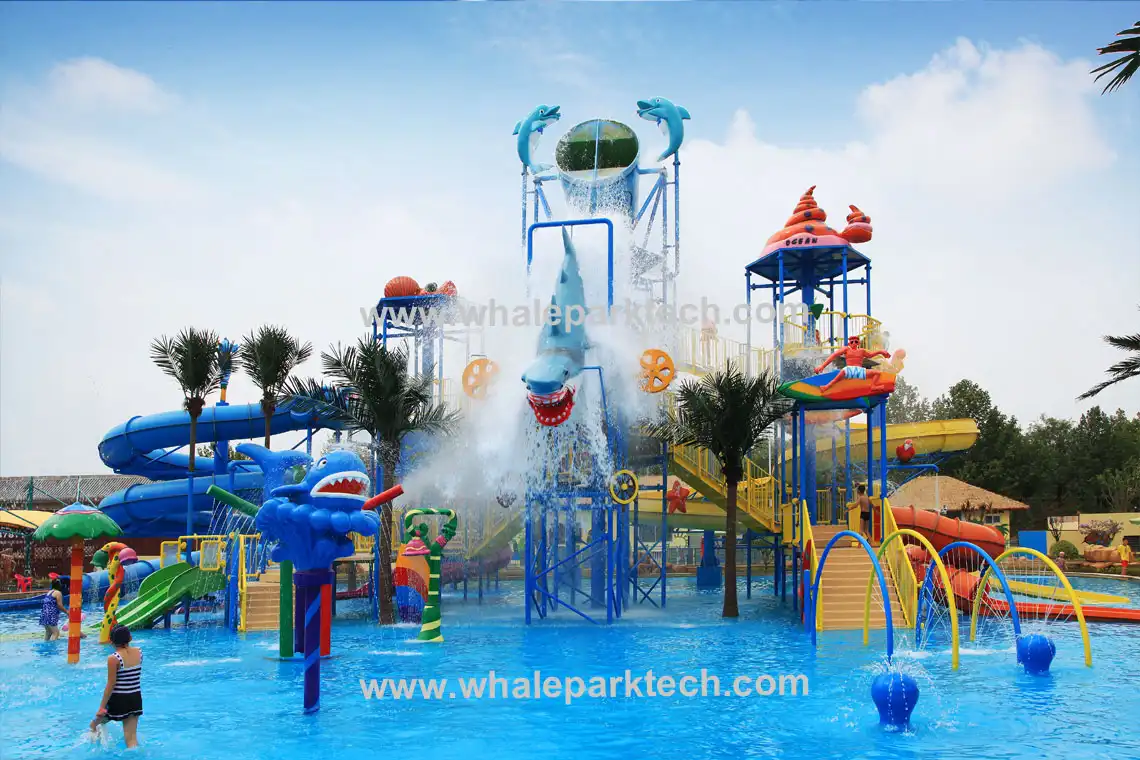
Quality is a system, not a certificate on a wall
Many buyers first ask whether a supplier holds ISO 9001. That is necessary but insufficient. A Fiberglass Water Slide Manufacturer may hold a quality-management certificate while producing sections that fail hydraulic performance testing or use resin systems unsuitable for intense UV exposure.
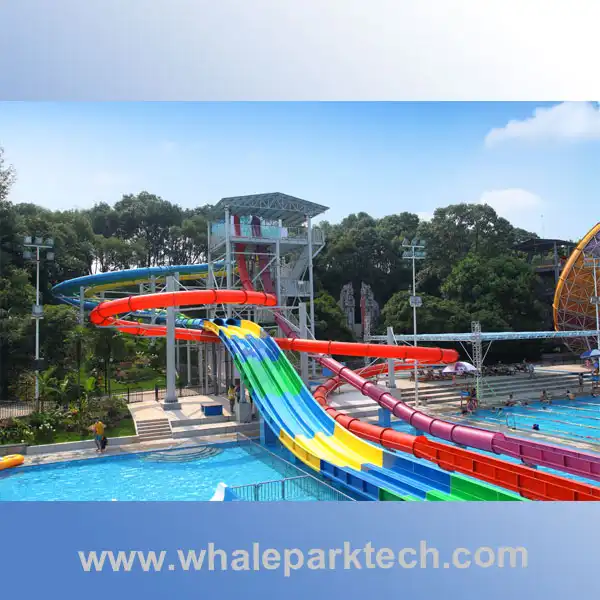
What separates a capable water slide manufacturer from a marginal one is whether quality is engineered into the product from the design stage. Water park slide design must resolve slide geometry, structural support, water delivery rates and splashdown together. Insufficient flow degrades ride performance; oversized pumping systems raise operating costs without improving the guest experience. Materials must withstand sun, water, treatment chemicals, repeated guest loading and local weather. For a Commercial Fiberglass Water Slide, the difference between a UV-stabilised gel coat and a standard finish is not cosmetic—it determines whether the surface holds its gloss for seasons or chalks and crazes within two years.
Safety compliance deserves scrutiny at documentation level, not label claims. Serious procurement frequently references ASTM F2376 for water slide systems, EN 1069 for water slides and ASTM F2461 for aquatic play equipment and Water Play Structures. A supplier that can produce valid test reports, structural calculations and material traceability documents operates at a different level from one that forwards a certificate image. Buyers should verify certification numbers with issuing bodies rather than accepting PDFs at face value.
For projects involving an Aquatic Play Structure—Tipping Bucket water play structure, Multi-Level Water Play Structure or interactive spray features—the relevant framework extends to ASTM F2461 and, in Europe, EN 17232. A water playground equipment supplier serving public or commercial venues should demonstrate that every structural post, anchoring system and accessible edge is designed to these performance standards, not merely decorated to look the part.
Service attitude reveals itself in the gaps
Every supplier is responsive before the purchase order is signed. The distinguishing behaviour emerges during installation coordination, commissioning, staff training and the first unplanned maintenance event.
A Commercial Water Slide Supplier that treats installation as a delivery handoff leaves the buyer to reconcile slide sections with foundations, water connections and safety features. An end-to-end water slide supplier for commercial use provides installation supervision, coordinates the interface between the slide and the wider aquatic system, and supplies documentation that the local inspection authority can use. This is not a premium add-on; it is the operational definition of a competent supplier.
After-sales conduct is equally telling. The commercial norm among serious water slide manufacturers includes structural warranties of around five years, mechanical component coverage of one to two years, and spare-parts dispatch measured in days rather than weeks. The more important indicator is whether the supplier has a documented technical support process after handover. A water park supplier that disappears once the final invoice is settled is not a partner—it is a transaction. For indoor water park equipment suppliers, post-installation support must also cover ventilation coordination, water-quality system integration and staff training, because indoor environments concentrate operational risks and maintenance demands.
Price fairness is about total project value
Price comparison is where inexperienced buyers make their most expensive mistake. A quotation that appears 30% lower than competing proposals often excludes design adaptation, structural supports, stairs and platforms, water-system interfaces, commissioning and spare-parts planning. The slide body is visible in the quotation; the engineering that makes it operate safely is not.
Equipment purchase typically represents only 50–60% of total water park investment. Civil works, water treatment and circulation, transport and lifting, inspection and compliance, and ongoing maintenance absorb the remainder. A water park equipment suppliers quotation that looks competitive at unit-price level can become the more expensive option once these project-layer costs are counted. Conversely, a water slide manufacturer that identifies foundation conflicts before production, supplies coordinated components and supports commissioning may reduce total cost even at a higher equipment price.
Legitimate price drivers are well understood: slide length and height, material specification, customisation complexity and technical integration. A custom water slide design that adapts a slide path to a restricted footprint or integrates theming into the mould carries genuine engineering cost. A supplier quoting it at standard-product pricing is either misunderstanding the scope or planning to recover the difference elsewhere. Fair pricing is not the lowest number on the table. It is a transparent number that maps to a defined scope, with included and excluded items stated clearly in writing.
A selection framework for Commercial Water Slide Suppliers
When evaluating water park manufacturers and water slide manufacturers, a structured sequence of questions produces more reliable decisions than a feature matrix.
Start with compliance infrastructure. Does the supplier hold the manufacturing and installation qualifications required by the destination jurisdiction? Can it produce design appraisal reports, type-test documentation and material certificates on request? In regulated markets, a water slide manufacturer without the correct qualification scope cannot deliver a legally operable attraction, regardless of price.
Test engineering fit, not catalogue breadth. A supplier with a deep product range is useful only if it can adapt that range to your site conditions. Ask how the proposed water park slide design responds to footprint, elevation, drainage, bather load and queue flow. A water park design that ignores guest circulation and lifeguard sightlines will create operational friction from opening day.
Examine custom capability honestly. Custom made water slides and custom water slide designs are valuable when they solve a real constraint—a tight footprint, a thematic requirement or a capacity target. They are a liability when customisation is decorative rather than engineering-led. A credible outdoor water slide manufacturer should show 3D modelling, structural simulation and hydraulic verification as part of design, not as post-rationalisation.
Separate project partners from product sellers. The final question is not “What does the slide cost?” but “What happens when something goes wrong?” A supplier providing installation guidance, commissioning support, maintenance documentation and a clear spare-parts pathway is structurally different from one that ships a container and closes the file.
For buyers in Southeast Asia, a water playground manufacturer malaysia or regional water park supplier may offer logistical and climate-adaptation advantages, especially for corrosion protection and UV resistance in tropical conditions. The same framework applies, but material specification and after-sales geography deserve additional weight.
The standard behind the standard
The commercial water slide industry does not lack suppliers. It lacks easily distinguishable signals of competence. Suppliers worth long-term relationships treat safety as a design input rather than a compliance output, price with transparency rather than omission, and remain present after handover. Whether you are procuring pool slides, a multi-level water play structure, commercial water slides for sale, or a full water park equipment list, apply the same standard: ask for evidence, compare total project value, and choose the Commercial Water Slide Supplier whose answers hold up when drawings become concrete.
Products
-
 Custom FRP Super Vortex Water Slides for Adults
-
 Flying Mat Fiberglass Water Slide
-
 Premium Fiberglass Water Slides & Commercial Water Park Equipment for Sale - Water Roller Coaster
-
 Premium Family Water Slides for Sale | Commercial Water Park Equipment Manufacturer
-
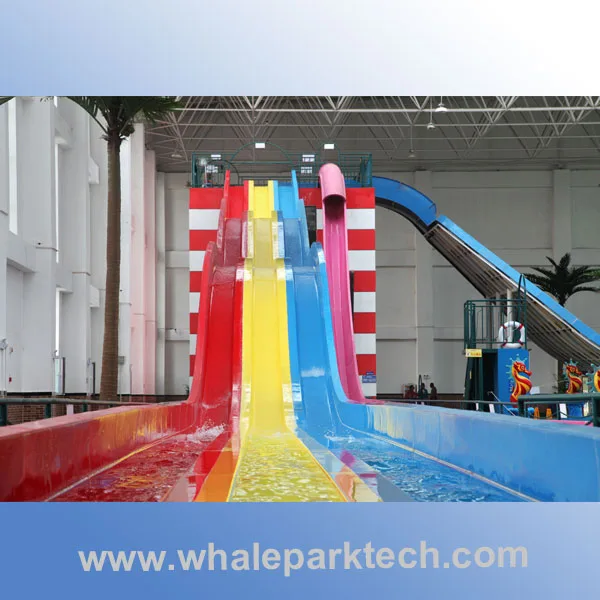 Commercial Indoor Rainbow Water Slide - FRP Slide with Steel Structure
-
 Large Sky Loop Water Slide for Sale | Water Park Equipment Suppliers
-
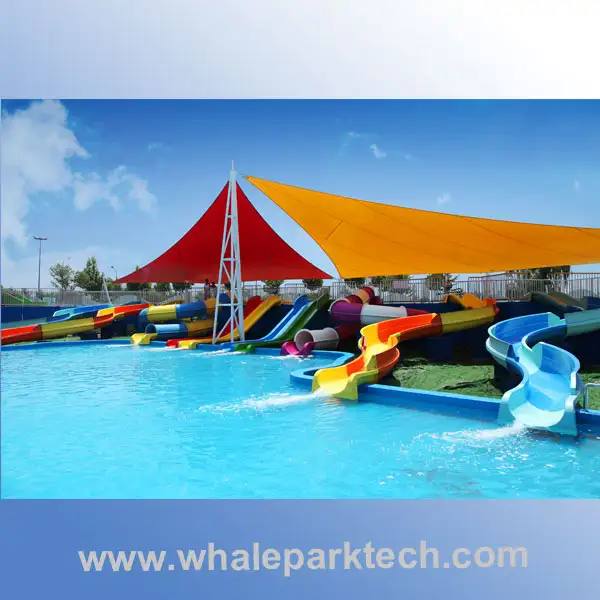 Parent-Child Water Slides | Safe Family Splash Rides for Kids
-
 Whirlwind Super Tornado Funnel Water Slide
-
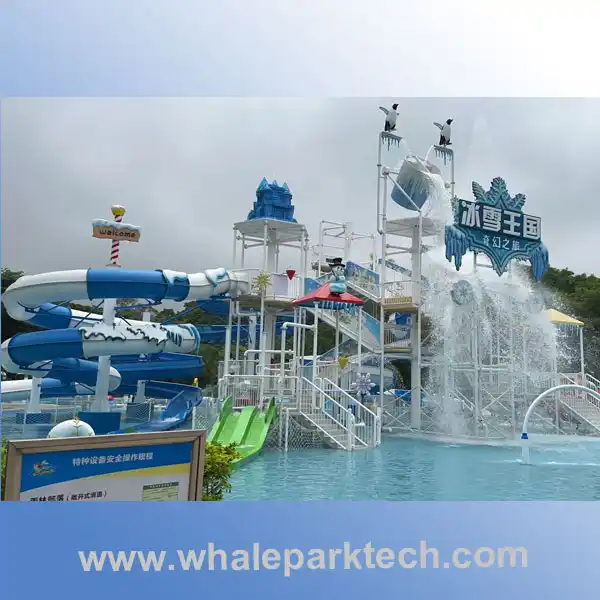 Interactive Aquatic Play Structure - Ice and Snow Kingdom Water Fortress
-
 Turbo Loop Water Slide - Fiberglass Commercial Water Slide